View on Map
 Emergency & Trauma Care







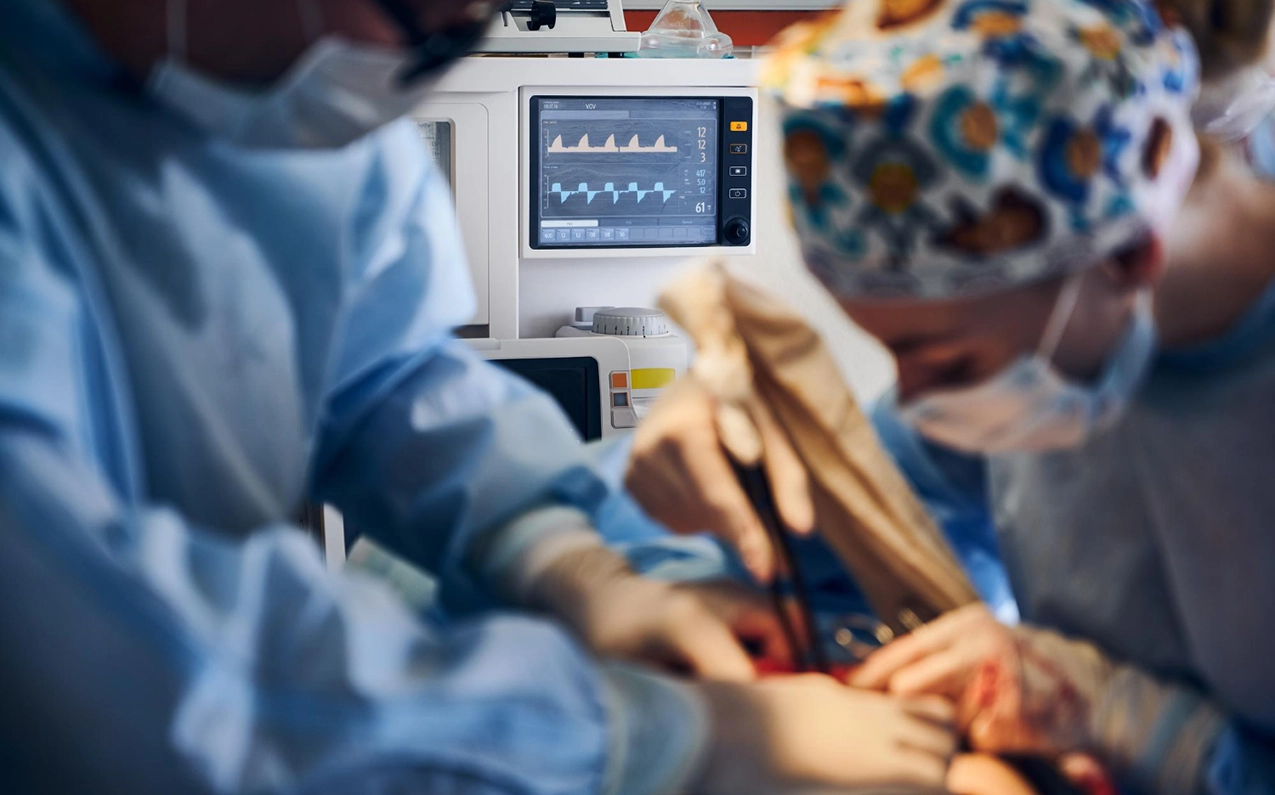
Peripheral Angioplasty
What Is Peripheral Angioplasty?
Peripheral artery disease (PAD) is a condition characterized by the accumulation of fatty deposits (plaque), which narrows the arteries in the legs. Consequently, patients may experience pain, cramping, and non-healing sores. Peripheral angioplasty offers a minimally invasive solution to clear these blockages and restore optimal blood circulation.
The procedure involves inserting a thin, flexible catheter—typically through the groin—to widen the affected arteries in the legs. A small balloon at the catheter’s tip is then inflated, compressing the plaque against the artery walls to facilitate improved blood flow.
To prevent the artery from narrowing again, physicians frequently implant a stent—a small metal mesh tube—to keep the vessel securely open. It is common for patients to receive a stent in a major artery following this intervention.
Types of Peripheral Angioplasty
We employ a minimally invasive approach to relieve arterial blockages in the legs through peripheral angioplasty. There are multiple advanced methodologies for performing this procedure. The two primary types include:
1. Balloon Angioplasty
This represents the most established and widely used form of peripheral angioplasty. It is a highly effective technique utilizing a specialized catheter:
- Catheter Insertion: A thin, flexible tube is introduced into an artery, usually in the groin area.
- Balloon Inflation: A miniature balloon at the tip of the catheter is inflated precisely at the site of the blockage.
- Restoring Flow: This action compresses the plaque against the arterial walls, widening the vessel and enhancing blood flow.
- Deflation and Removal: After the blockage is resolved, the balloon is deflated and extracted along with the catheter.
2. Laser Angioplasty
Laser angioplasty is a sophisticated alternative designed for resolving more complex arterial obstructions. While the initial catheter insertion mirrors balloon angioplasty, this advanced method incorporates a high-precision laser:
- Specialized Catheter Technology: The catheter features a state-of-the-art laser emitter at its tip.
- Precision Plaque Reduction: Upon reaching the obstruction, the laser emits highly targeted beams of light. This concentrated energy effectively vaporizes the plaque, carving a clear pathway to restore circulation.
- Optional Balloon Support: Following the laser application, a balloon may be temporarily inflated to further expand the artery and ensure prolonged patency.
Laser angioplasty is often the preferred modality for challenging blockages or heavily calcified plaques that may resist traditional balloon interventions.
Symptoms of Peripheral Artery Disease (PAD) It is critical to understand that angioplasty itself does not cause symptoms; rather, it is the treatment for the underlying condition, Peripheral Artery Disease (PAD). PAD manifests through various clinical signs that our interventions aim to resolve.
Common PAD Symptoms:
- Leg Pain or Cramping: Clinically known as claudication, this typically manifests in the calf muscles. The discomfort usually initiates during physical activity, such as walking, and diminishes during rest.
- Numbness or Weakness: Restricted blood flow can induce a persistent sensation of weakness in the affected extremities.
- Skin Changes: The skin on the legs may appear unusually pale—especially when elevated—or assume a reddish-blue discoloration when lowered. The affected area may also feel cool to the touch.
- Impeded Hair Growth: Diminished circulation can result in stunted hair growth or localized hair loss on the legs.
Advanced Symptoms:
Non-Healing Sores: Clinically termed critical ischemia, this presents as sores on the toes or feet that fail to heal properly. This is a severe complication requiring immediate clinical intervention, making early diagnosis paramount for long-term health.
What Causes the Need for Intervention?
The primary catalyst is Atherosclerosis—a chronic condition wherein cholesterol and fatty deposits accumulate, forming plaque on the arterial walls. Over time, this buildup hardens, severely restricting blood flow to the limbs.
Key Risk Factors:
- Smoking: Damages blood vessel linings and exponentially accelerates plaque development.
- Diabetes: Disrupts glucose management, significantly contributing to arterial blockages.
- High Blood Pressure: Uncontrolled hypertension places excessive mechanical stress on the arteries.
- High Cholesterol: Elevated levels of "bad" (LDL) cholesterol directly drive plaque formation.
- Lifestyle & Genetics: Factors including obesity, advancing age, and family medical history are critical contributors to PAD development.
How to Prevent Peripheral Angioplasty?
While PAD can progress silently, it is highly preventable through proactive lifestyle modifications. At Anandam Hospitals, we are dedicated to empowering patients to optimize their vascular health.
- Commit to Quitting Smoking: Smoking is profoundly detrimental to arterial health. Cessation is the most effective measure to protect the delicate vascular endothelium.
- Nutrition as Medicine: Adopting a heart-healthy diet rich in fruits, vegetables, and whole grains is imperative. Restricting saturated and trans fats actively prevents plaque accumulation.
- Prioritize Movement: Consistent physical activity is fundamental to vascular wellness. We advise a minimum of 30 minutes of moderate-intensity exercise, such as brisk walking or swimming, on most days.
- Proactive Management: Collaborate closely with your healthcare providers to continuously monitor and control blood pressure and cholesterol profiles.
- Weight & Diabetes Control: Sustaining an optimal weight and stabilizing blood glucose levels are vital for cardiovascular protection.
- Vigilant Foot Care: Routinely examine the feet for lacerations or discoloration, as compromised circulation heavily delays tissue healing.
Diagnosis of Peripheral Artery Disease
To ascertain if angioplasty is the optimal clinical pathway, our specialists deploy a comprehensive diagnostic suite to evaluate the location and severity of arterial blockages.
- Ankle-Brachial Index (ABI): A straightforward, non-invasive assessment comparing blood pressure in the ankles to that in the arms.
- Ultrasound & Doppler Imaging: Utilizes high-frequency sound waves to visualize arterial anatomy and quantify blood flow velocity and direction.
- Segmental Plethysmography: A painless diagnostic test utilizing inflatable cuffs to pinpoint specific zones of diminished circulation.
- Angiography: An advanced radiological technique utilizing contrast dye to map the arterial network with high fidelity. We provide various modalities, including CTA and MRA, to construct the most precise treatment roadmap.
Peripheral Angioplasty Stages
Grasping the procedural steps can offer significant peace of mind. This minimally invasive intervention is executed with utmost precision.
- Stage 1: Preparation: The patient is comfortably positioned, and the access site—usually the groin—is numbed using local anaesthesia. Sedation is administered to ensure complete relaxation.
- Stage 2: Catheter Insertion: A minimal incision is made, and a flexible catheter is threaded into the artery under live X-ray guidance (fluoroscopy) to guarantee absolute accuracy.
- Stage 3: Balloon Inflation: Upon reaching the obstruction, a specialized balloon is inflated, compressing the plaque against the vessel wall to restore normal blood flow.
- Stage 4: Stent Placement (Optional): To secure the artery's patency, a small, expandable mesh scaffold (stent) may be deployed at the treatment site.
- Stage 5: Removal and Closure: The catheter and guidewire are meticulously withdrawn, and the access point is secured with specialized closure devices or sutures.
- Stage 6: Recovery: Patients are closely observed in a dedicated recovery suite for several hours. The majority of individuals are discharged on the same day.
Treatment and Management Post-Procedure
The technical success of the procedure represents only the beginning of the care journey; comprehensive aftercare is mandatory for optimal long-term results.
- Medication Adherence: Physicians typically prescribe anticoagulants or antiplatelets to prevent thrombosis at the intervention site.
- Activity & Rest: While vigorous exertion must be avoided initially, light ambulation is strongly encouraged to stimulate healthy circulation.
- Wound Care: Maintaining a clean and dry incision site is crucial for infection prevention.
- Long-Term Follow-Up: Scheduled evaluations at Anandam Hospitals enable our clinical team to track recovery through physical examinations and advanced imaging.
Road to Recovery and Aftercare
The pathway to restored vitality is reinforced by a structured recovery roadmap.
- Immediately After the Procedure: The primary focus is rest and recovery. Any mild discomfort at the catheter insertion site is effectively controlled with prescribed analgesics.
- The First Few Days: Emphasize light physical activity, such as gentle walking, while strictly avoiding heavy lifting. Adherence to a heart-healthy nutritional plan is vital for tissue healing.
- Long-Term Vitality: Sustaining healthy lifestyle modifications—including smoking cessation and rigorous weight management—is critical to averting future vascular blockages. A balanced, proactive lifestyle ensures unhindered, optimal blood flow.
Frequently Asked Questions
It is a minimally invasive clinical procedure designed to open narrowed or obstructed arteries, predominantly in the lower extremities, restoring optimal circulation.
It mitigates the clinical symptoms of PAD, such as claudication and non-healing ulcers, while preventing severe vascular complications.
The administration of local anaesthesia ensures negligible discomfort; patients generally only experience mild pressure during the intervention.
The procedure typically spans one to two hours.
Most individuals resume their standard daily activities within approximately one week.
A stent is a miniature metallic mesh scaffold utilized to structurally support the artery and maintain long-term patency.
Yes. Should restenosis (re-narrowing) occur, the intervention can be safely repeated.
Ideal candidates are individuals whose symptoms severely disrupt daily function or those presenting with non-healing ischemic wounds.
While primarily performed on an outpatient basis, select patients may require overnight clinical observation.
It demonstrates the highest efficacy in larger vessels; heavily calcified or microvascular blockages may necessitate alternative therapeutic approaches.
Alternative strategies include aggressive lifestyle modifications, targeted pharmacotherapy, or surgical bypass for advanced pathology.
In the absence of a stent, there is a statistically higher probability of the treated artery undergoing restenosis over time.
While it yields profound symptomatic relief, PAD remains a chronic systemic condition demanding continuous medical management.
Depending on the patient's holistic health profile, bilateral treatments can be performed during a single clinical session if deemed necessary.
The majority of insurance policies provide coverage when the procedure is classified as medically necessary; our administrative team ensures complete financial transparency regarding care costs.