View on Map
 Emergency & Trauma Care







About Us
Advanced Surgical Care with Minimally Invasive Techniques Safe and effective surgical management including laparoscopic and minimally invasive procedures.
Procedures
Laparoscopic surgery
Hernia repair
Gallbladder surgery
Appendix surgery
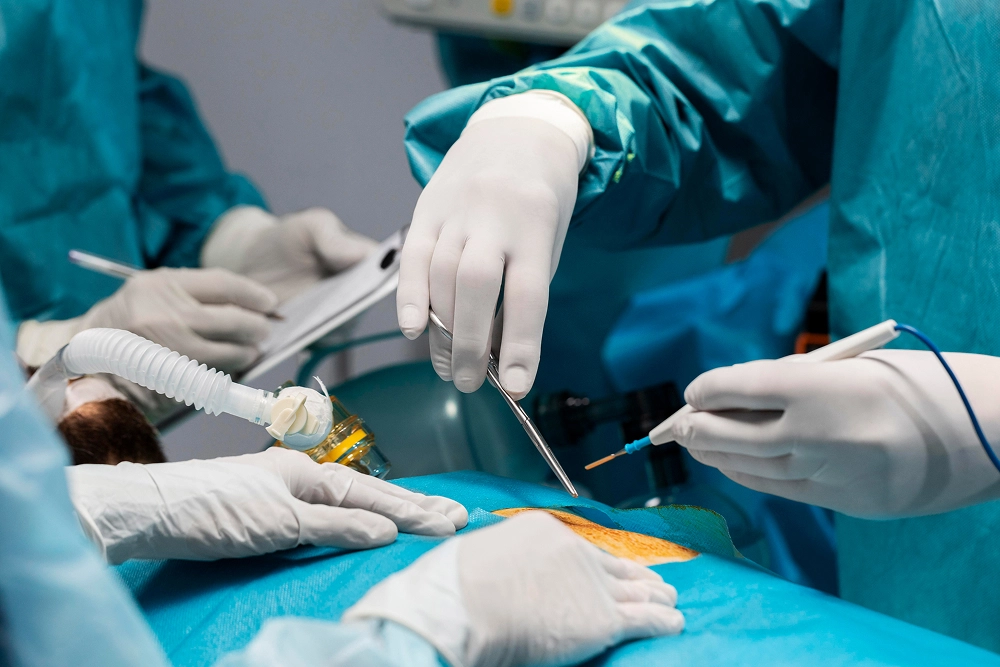
Added Information
General surgeons perform a wide variety of elective and emergency operations:
Abdominal Procedures
- Appendectomy: Surgical removal of the appendix, often performed as an emergency for appendicitis.
- Cholecystectomy: Removal of the gallbladder, typically to treat gallstones.
- Hernia Repair: Fixing weak spots in the abdominal wall (inguinal, umbilical, or hiatal hernias) using stitches or synthetic mesh.
- Colectomy/Colon Surgery: Resection of the colon for conditions like colorectal cancer, diverticulitis, or Crohn’s disease.
- Splenectomy: Surgical removal of the spleen.
Other Core Procedures
- Breast Surgery: Includes biopsies, lumpectomies, and mastectomies for treating breast cancer.
- Endocrine Surgery: Operations on the thyroid (thyroidectomy), parathyroid, and adrenal glands.
- Soft Tissue & Skin: Removal of cysts, lipomas, or skin cancers (melanoma), and management of complex wounds or abscesses.
Specialties and Subspecialties
While "General Surgery" is a specialty itself, many surgeons subspecialise in specific areas:
- Laparoscopic/Minimally Invasive Surgery: Focuses on keyhole techniques used across various procedures.
- Surgical Oncology: Specialised management of complex cancer-related surgeries, such as those for the liver, pancreas, or colon.
- Trauma and Acute Care Surgery: Managing critically ill patients and emergency injuries (e.g., from accidents or gunshot wounds).
- Colorectal Surgery: Specialised treatment for diseases of the colon, rectum, and anal canal.
- Vascular Surgery: Diagnosis and surgical treatment of diseases affecting arteries and veins (e.g., varicose veins or carotid artery disease).
- Bariatric Surgery: Surgical interventions for weight management, such as gastric bypass or sleeve gastrectomy.
Advanced Technology and Treatments
The field is shifting toward a "digital ecosystem" where technology enhances surgical precision:
- Robotic-Assisted Surgery: Systems like the da Vinci Surgical System allow surgeons to operate through tiny incisions with magnified 3D high-definition vision and robotic arms that have greater dexterity than the human hand.
- Laparoscopic Technology: Uses a laparoscope (a thin tube with a camera) to project the surgical field onto a high-definition monitor, allowing for "keyhole" surgery.
- Augmented Reality (AR) & Virtual Reality (VR): AR overlays critical anatomical data (like blood vessel maps) directly onto the surgeon’s view during operation. VR is increasingly used for realistic surgical training and pre-operative planning.
- Artificial Intelligence (AI): AI algorithms analyse vast amounts of data to provide real-time guidance, predict potential complications, and assist in surgical decision-making.
- 3D Printing: Used to create lifelike replicas of a patient’s internal anatomy for practice before complex cases, as well as customised implants or surgical guides.
- Telesurgery: Enables specialists to perform or supervise surgeries from remote locations using high-speed 5G networks and robotic systems.
Meet Our Super Specialists
Experienced Hands. Compassionate Care.
No posts found
Make an Appointment
Need the Right Medical Direction?
Our specialists are ready to assess and guide you.
- Advanced diagnostics
- Personalised treatment pathways